

The Great Wildebeest Migration – Nature’s Most Spectacular Journey
A Natural Phenomenon That Defines an Ecosystem
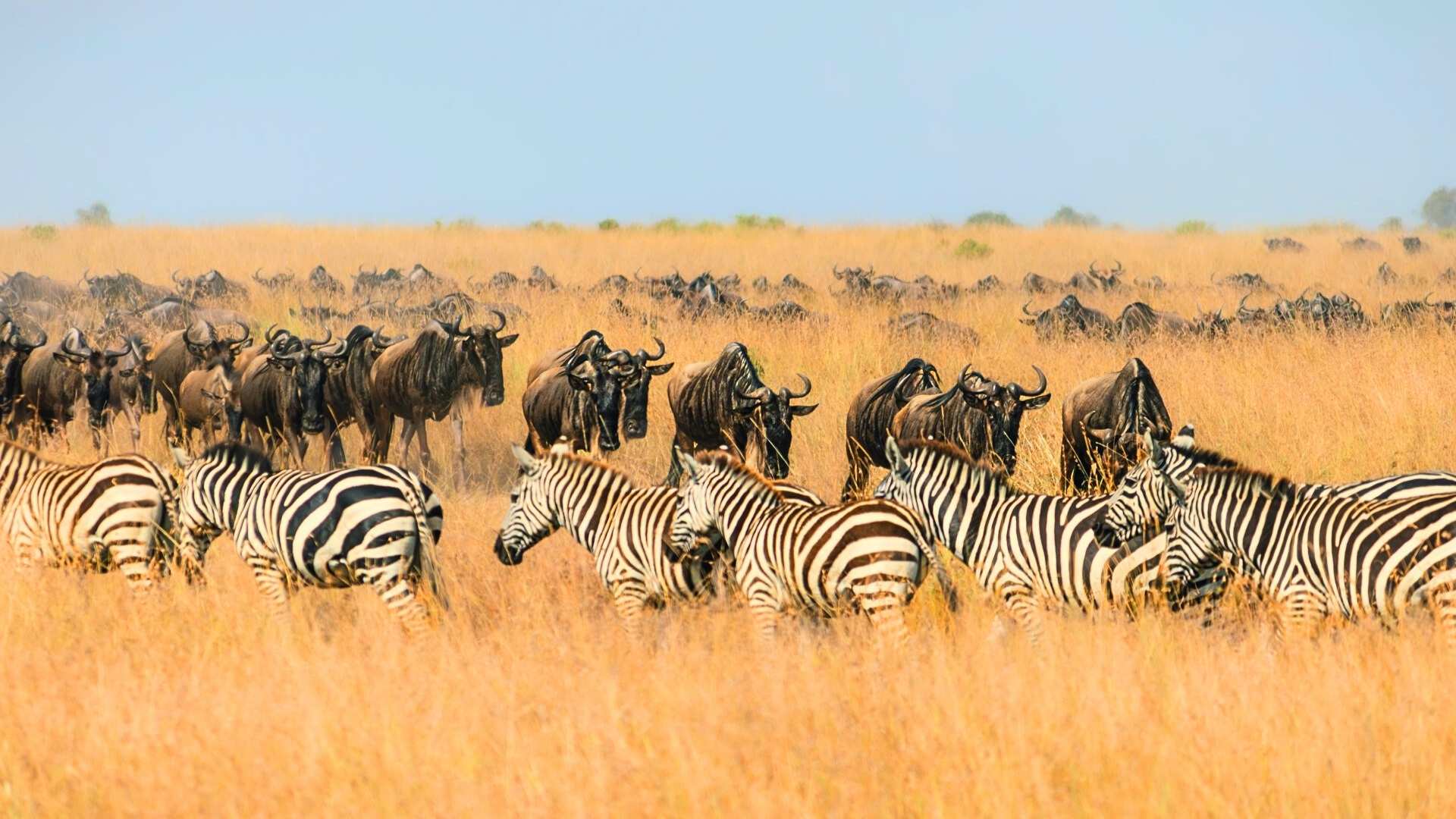
Every year, East Africa witnesses one of the most significant natural events to grace this planet, the Great Wildebeest Migration. A natural marvel comprising over 1.5 million wildebeest, alongside zebras and gazelles. This bi-annual exodus of beastly movement shapes the course of life in the Serengeti and Masai Mara.
However, this isn’t a simple migration in search of a better spot. It’s a classic instance of survival. For all those who love wildlife photography, this event offers a chance to test their skills and marvel at nature’s unfathomable awesomeness. This can be the ultimate, once-in-a-lifetime opportunity to practice wildlife photography that can level up your skills and give you an otherworldly experience.
The Cycle of Life: Understanding the Great Wildebeest Migration
Every year, the wildebeest migrate in a circular form due to the seasonal rains. A unique survival instinct powers their migration: they follow the fresh grass pastures that sprout after the rains, ensuring their survival.
Here is a wildebeest migration map showcasing the different phases of the same journey taken annually in Tanzania and Kenya:
| Time of the Year | Region | Key Events and Highlights |
| December – March |
Southern Serengeti (Ndutu & Kusini) |
Calving Season – More than 500,000 calves are born, making the predators the most active. |
| April – May | Central Serengeti | Herds head north; the long rains result in lush grazing. |
| June – July | Western Corridor | The start of the Grumeti River crossing, followed by dramatic action between predator and prey |
| August – October |
Northern Serengeti / Masai Mara |
Mara River crossing |
| November | Back to Southern Serengeti | Hers start moving South and complete the cycle |
Wildbeest Migration, Earth’s most enthralling cycle, is one of the last outstanding, large-scale migrations.
The Great Wildebeest Migration in Tanzania
The wildebeest migration begins in Serengeti National Park, where most of the herd live most of the year. The Serengeti plains erupt to life from December to March. It is described as a calving season where, on average, over 8,000 calves are born daily, attracting lions, cheetahs, and hyenas.
In April, the long rains shift to the north, so do the herds. The Serengeti.com website revealed that this indicates the start of a shift to the Western Corridor. The view of the wildebeest moving like water through the prairie is one of Africa’s natural wonders.
In this phase, stunning game viewing opportunities with less visitor traffic are available. Ndutu and Central Serengeti cabins offer a front-row seat to the action.
The Grumeri River Crossing
By May and June, the herds arrive at the Grumeti River in the western Serengeti of Tanzania. This also marks the start of the deadly game of life and survival. Under the murky waters of the rivers lay massive Nile crocodiles, making the crossings a high-stakes drama.
The Grumeti River crossings offer a less crowded alternative to the Mara River, and they’re just as exciting. Seeing the unceasing cycle of life and death without the human traffic of Kenya’s peak season is a must-see for photographers seeking exclusivity and unfiltered intensity.

Crossing into Kenya: The Infamous Mara River
The most spectacular act begins between July and October, with the start of the Wildebeest Migration Kenya. The herds stream northward across the border into the Masai Mara National Reserve, crossing the treacherous waters of the Mara River.
Indeed, this event is rightly described as “one of nature’s most intense displays of survival. Thousands of vulnerable wildebeest dive blindly into the jaws of the most dangerous, crocodile-filled river in Africa. At the same time, the Mara’s proud big cats take advantage of the safety of the banks.
Many people consider this period the best moment to view the Great Wildebeest Migration. The best views can be experienced from camps in Kogatende, Northern Serengeti, or the Mara Triangle.
The Return of Rains in Tanzania: A Full-Circle Moment
Around late October and November, the rains return to the Serengeti. Once again, the herds turn south, guided by the scent of fresh grass. The wildebeest migration in Tanzania concludes as the herds return to their habitats to restart a new chapter.
What Is the Best Time to Witness the Great Wildebeest Migration?
While the migration happens year-round, the best time to visit depends on what you want to see.
| What You’ll Experience | Location | Best Time |
| Calving Season (Births and predators) | Southern Serengeti | December – March |
| Grumeti River Crossing | Western Serengeti | May – June |
| Mara Crossing | Northern Serengeti & Masai Mara | July – October |
| Migration Returns | Central to Southern Serengeti | November |
Each stage of the great wildebeest migration offers a unique perspective, from the miracle of birth at the beginning to the raw drama of river crossings. Hence, every stage is crucial and worth a visit.
What Makes the Great Wildebeast Migration Worth the Hype?
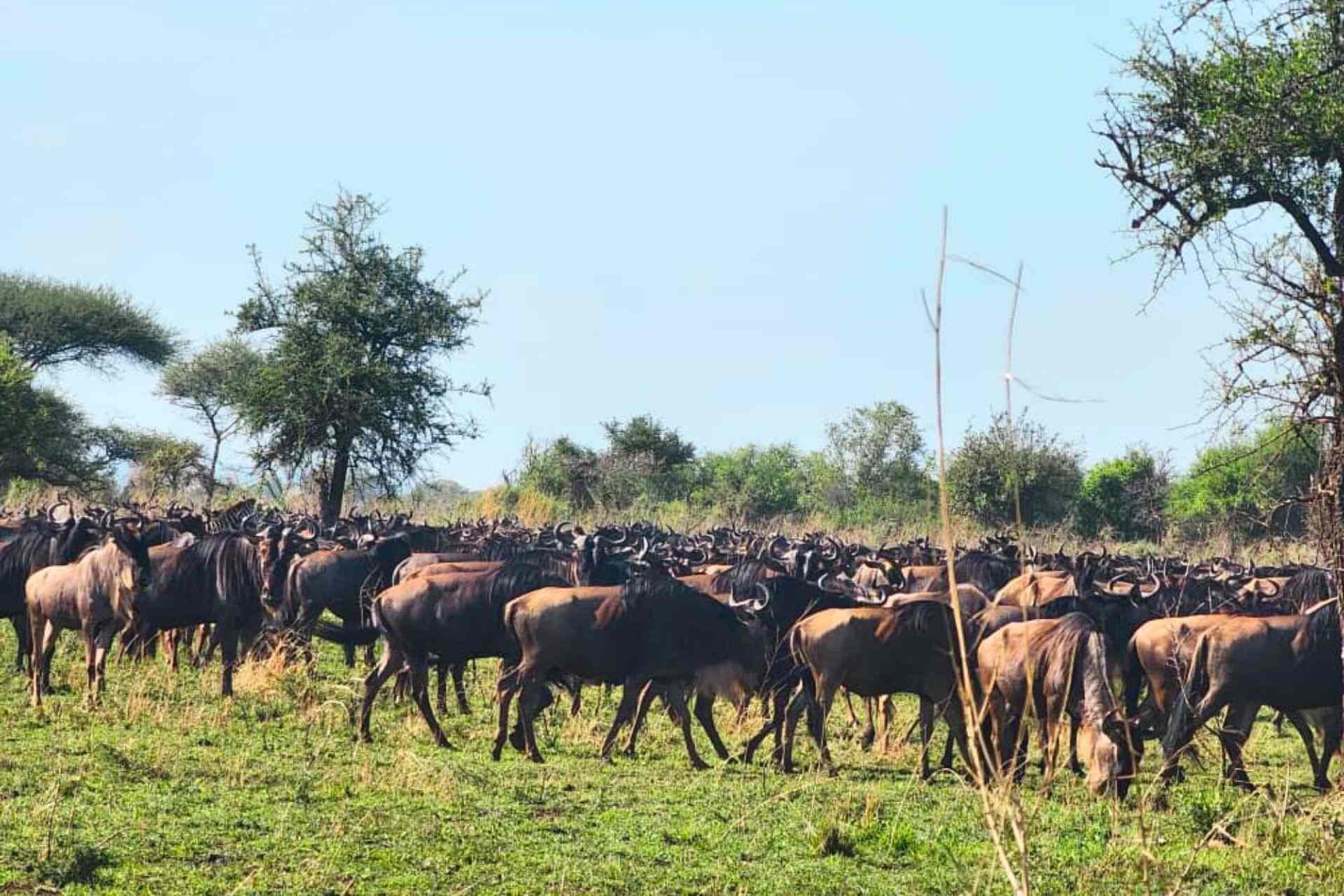
The great wildebeest migration is more than an ecological adventure for tourists – it’s East Africa’s ecological heartbeat. This movement sustains the Serengeti–Mara ecosystem through fertilized soils, regenerated grasslands, and supported predator populations. Not to forget that it is also a massive economic success, attracting thousands of visitors every year and bolstering conservation-based tourism in both Tanzania and Kenya. Conserving this ecological wonder ensures this magnificent circle of life will survive for generations to witness.
FAQs – The Great Wildebeest Migration
1. What is the main reason for the wildebeest migration?
The Great Wildebeest Migration follows rainfall to find food and water, including fresh, green grass. This journey is cyclical and instinctive, necessary for the gigantic herd’s survival. The exact path and time depend on where the rainfall occurs.
2. How many wildebeests are in the general migration?
Every year, nearly 1.5 million wildebeests take part in the Great Migration and begin their fascinating journey. The migration is mainly driven by the search for water and fresh grazing. Typically, the herd follows a circular route and covers about 1,800 miles.
3. What dangers do wildebeests face?
During river crossings, wildebeests face dangers from numerous predators, including lions, crocodiles, and hyenas. There are also environmental challenges that pose threats, including thirst, hunger, exhaustion, and stampedes. Weak, old, or young animals are more likely to be affected by these challenges and predators.
4. What are some facts about the Great Migration?
Here are 5 quick facts about the Great Migration:
- The Great Migration is considered the world’s largest overland migration, including 1.5 million wildebeests, 200,000 zebras, and Grant’s gazelles in smaller quantities.
- Wildebeests can walk right after their birth. This ability helps them to keep up with the herds.
- Although they are migration partners, zebras and wildebeests have different grazing preferences. Both animals eat different types of grass, which explains their ability to graze in harmony.
- The Great Migration only began in the 1960s.
- Since wildebeests are not natural leaders, their herds often split up and move in different directions. The wildebeest migration maps, which generally show the mega-herd’s cyclical route, help understand the migration path. However, if smaller herds are also considered, the entire migration can cover half of the Serengeti.
Bottom Line
The Great Wildebeest Migration is a living, breathing wonder, a rhythm that has pulsed through East Africa for millennia. When you see a newborn taking its first steps on the Serengeti plains or thousands of wildebeests braving the Mara River, you are part of one of the world’s grandest natural stories. It’s not just about seeing wild creatures; it’s about being a part of nature’s original narrative.
Excited to experience nature’s wild wonders?
The first step starts with this button 👇