
Climbing Kilimanjaro Safely: Your Complete Safety Guide
Is Kilimanjaro Safe to Climb?
Mount Kilimanjaro, Africa’s highest peak, attracts travelers from all over the world looking for adventure and the opportunity to stand on the “Roof of Africa.” If you are planning to climb this iconic mountain, one important question may be on your mind: Is Kilimanjaro safe to climb, especially for first-time climbers?
The good news is that Kilimanjaro is considered safe for most healthy travelers when approached with proper preparation, realistic expectations, and experienced support. Unlike technical mountains that require mountaineering skills and climbing equipment, Kilimanjaro is a non-technical trek, meaning no technical climbing experience is required.
However, climbing Kilimanjaro safely involves more than simply walking uphill. Factors such as altitude, weather, physical preparation, proper gear, and guidance all play an important role in making the experience both safe and enjoyable.
This Kilimanjaro safety guide explains the main risks, precautions, and practical tips to help you prepare confidently for the journey.
What Are the Main Risks of Climbing Kilimanjaro?
Altitude Sickness
The biggest challenge on Kilimanjaro is acute mountain sickness (AMS), also known as altitude sickness. This occurs when the body ascends to high altitude too quickly without enough time to adjust.
Kilimanjaro’s summit stands at nearly 5,900 metres above sea level, where oxygen levels are significantly lower. Even physically fit climbers can experience the effects of altitude.
Common symptoms include:
- Headaches
- Nausea
- Dizziness
- Fatigue
In rare cases, more severe altitude-related illnesses can occur. While uncommon, serious symptoms should never be ignored.
Terrain and Weather Challenges
Kilimanjaro’s landscape changes dramatically throughout the trek, from rainforest trails to cold alpine terrain and icy summit conditions.
Temperatures can fall below freezing, particularly during summit night, and weather conditions may change unexpectedly. Without proper clothing, pacing, and preparation, trekkers may face challenges such as cold stress, exhaustion, or slips on uneven terrain.
Other Health and Safety Concerns
Although Kilimanjaro is a trekking adventure rather than a technical climb, hikers should also prepare for:
- Dehydration
- Physical exhaustion
- Cold exposure
Many of these risks can be reduced through good preparation, proper hydration, and support from experienced guides.

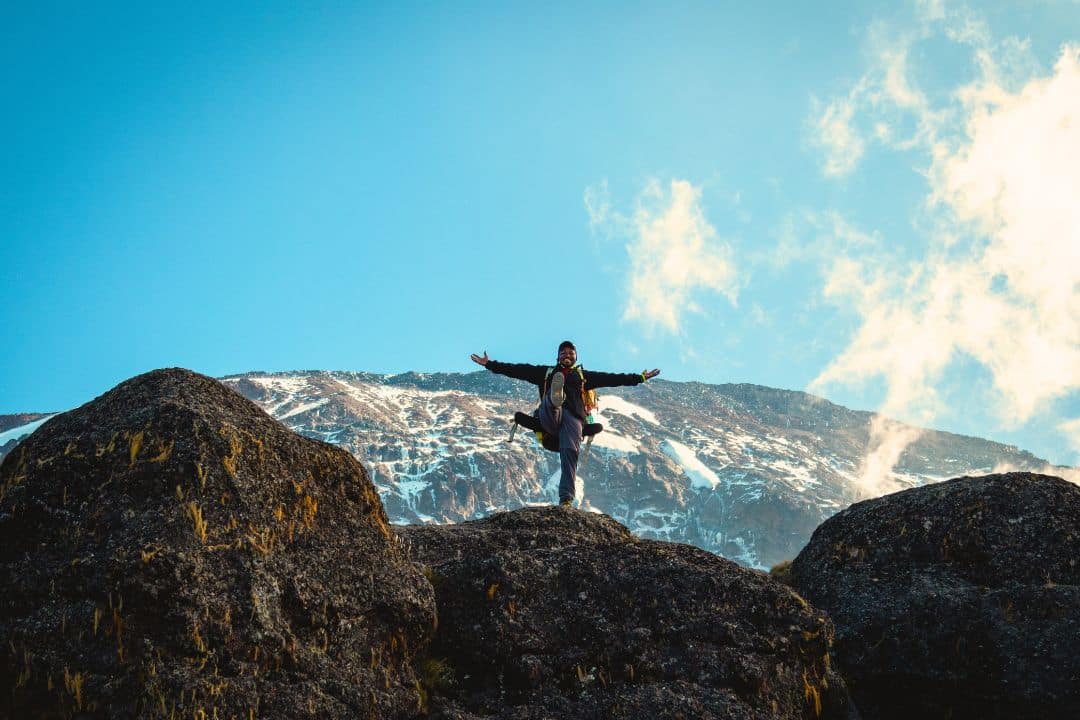
Mount Kilimanjaro towering above the rugged landscape of northern Tanzania.
How to Stay Safe on Kilimanjaro
Physical Preparation and Training
Although Kilimanjaro is non-technical, physical preparation is still important. Long trekking days and high altitude require endurance and stamina.
Activities such as long walks, hiking, and stair climbing in the weeks leading up to your trek can help improve fitness and prepare your body for the demands of the climb.
Choosing the Right Route
Not all Kilimanjaro routes provide the same acclimatization experience.
Longer routes such as Lemosho (7–9 days) and Northern Circuit (9–10 days) allow for a slower ascent, giving the body more time to adjust to altitude. This may reduce the risk of altitude sickness and improve summit success rates.

Gear and Equipment
Having the right gear is one of the most important parts of staying safe on Kilimanjaro.
Essential items include:
- Layered clothing for changing temperatures
- Waterproof hiking boots with ankle support
- Water bottles or hydration systems (3–4 litres per day)
- A cold-weather sleeping bag suitable for below-freezing temperatures
- First-aid essentials and sunscreen
The right equipment helps protect against changing weather and challenging mountain conditions.
Kilimanjaro Safety Tips During the Climb
Take It Slow: “Pole Pole”
One of the most common phrases on Kilimanjaro is the Swahili saying “pole pole,” meaning “slowly, slowly.”
Moving at a steady pace allows your body time to acclimatize and reduces the risk of altitude sickness. Guides encourage trekkers to walk slowly, focus on breathing, and enjoy the experience rather than rushing to the summit.
Stay Hydrated and Eat Well
Drinking enough water and eating balanced meals are essential during the climb.
Trekkers are encouraged to drink 3–4 litres of water daily to stay hydrated and support altitude adjustment. Eating regularly also helps maintain energy during long trekking days.
Guides and porters typically provide filtered or boiled water and meals suitable for climbers.
Daily Health Monitoring
Professional guides often monitor trekkers’ wellbeing during the climb by checking:
- Oxygen saturation levels
- Heart rate
- Signs of altitude sickness
If symptoms become severe, descending is the safest option.
Listen to Your Body
Altitude affects everyone differently, regardless of fitness level.
Following your guide’s advice and paying attention to symptoms such as confusion, difficulty breathing, or loss of coordination is essential for a safe trek.
Why Guides Are Essential on Kilimanjaro
Professional guides do far more than lead the way. They help monitor health, manage pace, provide encouragement, and support trekkers throughout the climb.
Many guides carry emergency oxygen and are trained in altitude awareness and response.
Since licensed guides are mandatory in Kilimanjaro National Park, solo climbing is not allowed, adding another important layer of safety for visitors.
Choosing an experienced and reputable tour operator can greatly improve your overall trekking experience.
Professional Safety Checklist for Trekkers
Before climbing Kilimanjaro, keep the following checklist in mind:
✔ Begin training 8–12 weeks before the climb
✔ Choose experienced operators and qualified guides
✔ Consider longer routes for better acclimatization
✔ Drink water and eat regularly each day
✔ Follow the “pole pole” pace
✔ Monitor symptoms of altitude sickness
✔ Have travel insurance with evacuation coverage
✔ Pack suitable cold-weather gear
Frequently Asked Questions About Kilimanjaro Safety
Is Climbing Mount Kilimanjaro Dangerous?
Kilimanjaro is not technically dangerous, but altitude and weather conditions are real challenges. With proper preparation and experienced guides, it is considered safe for most healthy travelers.
Do You Need Travel Insurance for Kilimanjaro?
Yes. Travel insurance should include high-altitude trekking and emergency evacuation coverage in case of medical issues or early descent.
What Are the Common Symptoms of Altitude Sickness on Kilimanjaro?
Common symptoms include headaches, nausea, dizziness, and fatigue. Severe cases are uncommon but require immediate medical attention.
Can Beginners Climb Kilimanjaro Safely?
Yes. Kilimanjaro is one of the more accessible high-altitude treks, and many first-time climbers safely reach the summit with proper preparation and guidance.
Is Kilimanjaro Safe to Climb Alone?
No. Solo trekking is not allowed in Kilimanjaro National Park. All climbers must trek with licensed guides, which improves overall safety and support.
Is Kilimanjaro Safe? Here’s the Bottom Line
So, is Kilimanjaro safe to climb? The answer is yes, for most travelers who prepare properly and climb with experienced support.
While Kilimanjaro presents challenges, especially altitude and changing weather conditions, these risks can be managed through preparation, proper pacing, suitable gear, and guidance.
With the right approach, climbing the “Roof of Africa” can be both a safe and unforgettable adventure.
For more travel advice and helpful trekking tips, feel free to contact the World Adventure Tours team.